Why your AI strategy is missing the most important part
Start with the people expected to use it, and what they need to make it work.
Read the essay
You know that thing you keep doing? The follow-up. The report. The research. The emails. The posts. The information you keep hunting down.
It’s not necessarily broken. You’re just tired of doing it the same way. We’ll figure out what actually needs to happen, and where AI can make it easier.
Maybe it takes ten minutes. Maybe it takes half your Friday. Maybe nobody complains about it. But every time it comes around, you think, “There has to be an easier way.”
That’s a good place to start. You don’t need to know whether you need ChatGPT, Claude, Copilot, an automation, or something custom. You don’t need an AI strategy. Just show me the work.
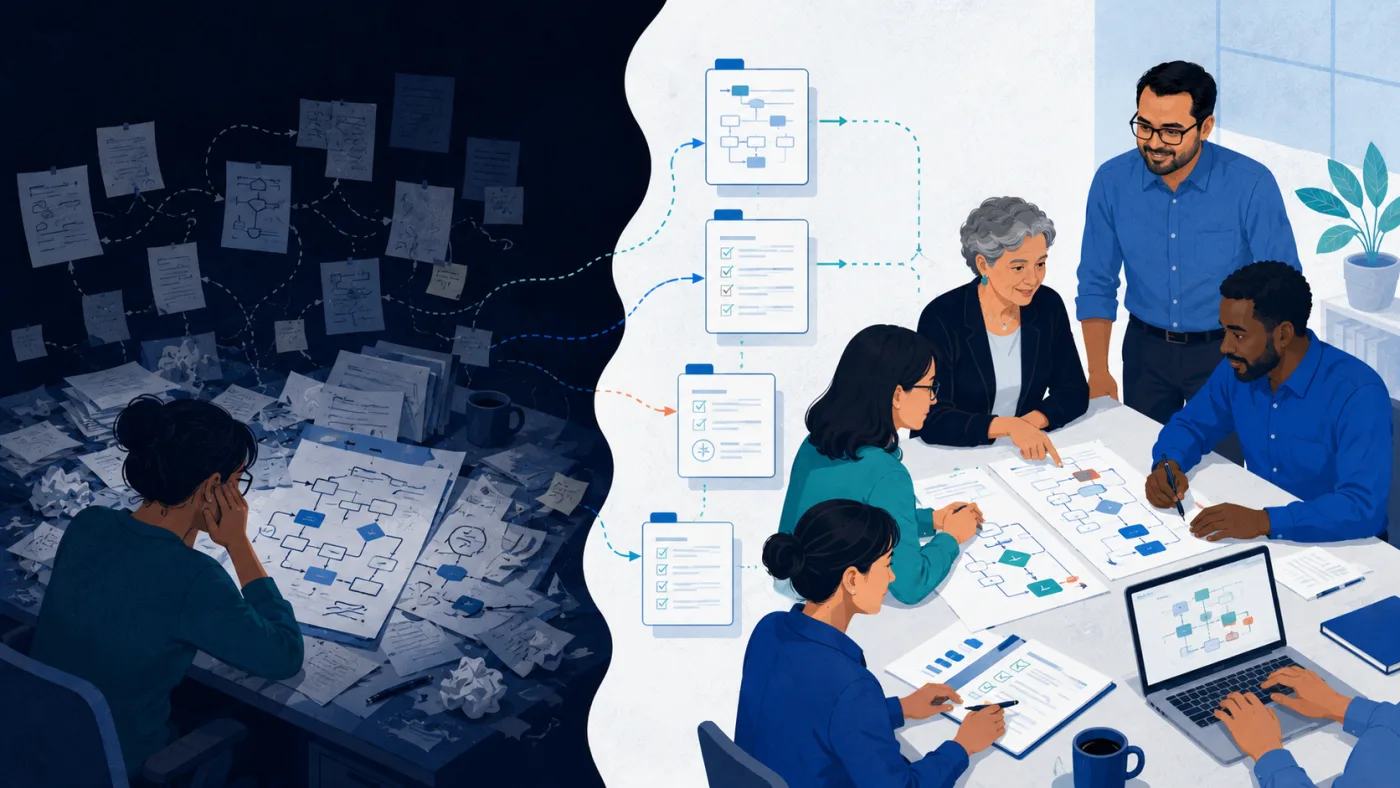
Illustrative example, not a client result.
Finding the right inputs and chasing updates can take more effort than the report itself.
How it works
I’ll look at how you do it now: what comes in, what you look for, what you decide, what happens next, and what changes when something unusual comes up.
Then we build only what helps.
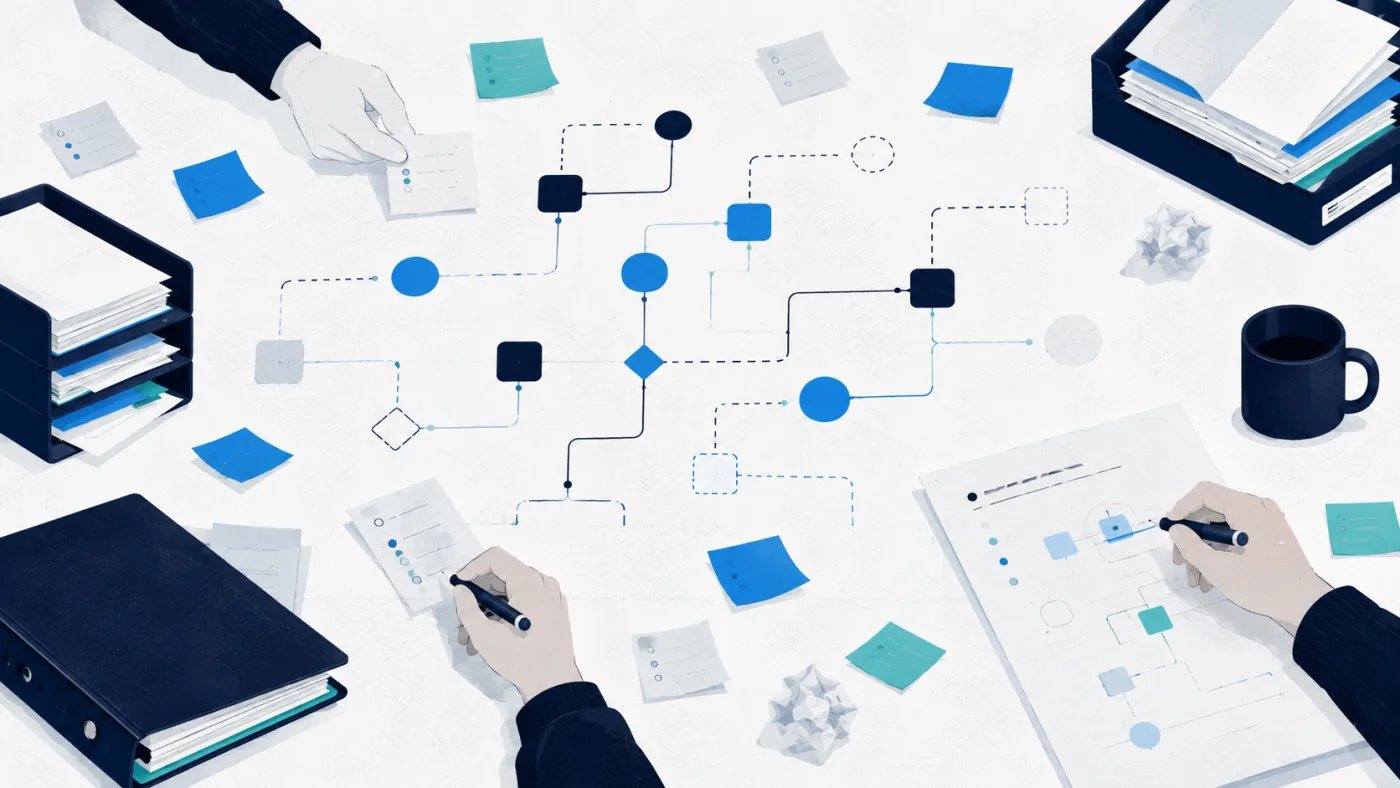
Record a few minutes of your screen while you do the work, and talk me through it. Include real examples, even the weird ones.

We sort out what needs to happen, what can go, what stays with you, and where AI can help. Then we try it on your real work.
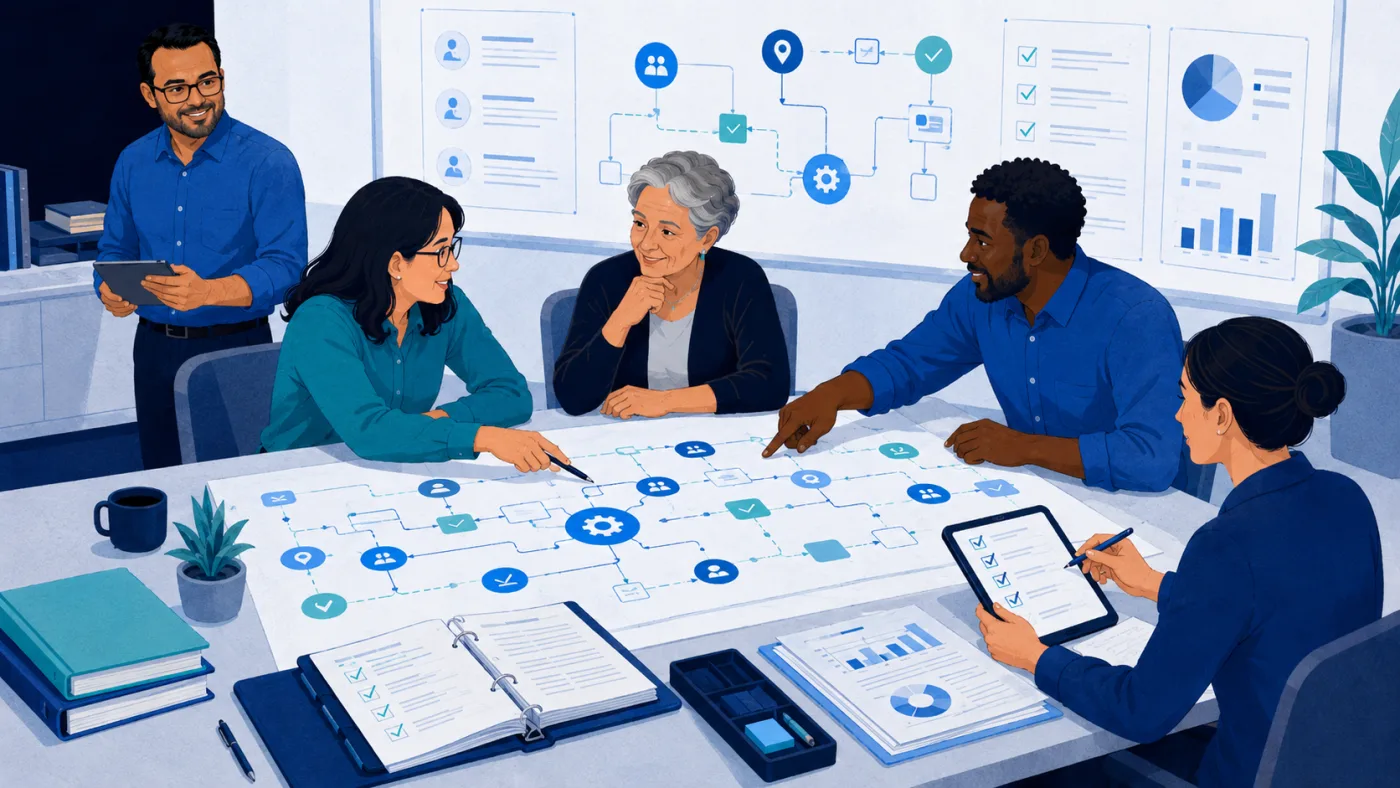
Maybe I show you how. Maybe we build it together. Maybe you say, “Can you just build this for me?” That works too.
The goal isn’t to hand your work to a bot and hope for the best. We decide what AI can handle, what you want to approve, what should always stay with a person, and what happens when something doesn’t fit the normal situation.
We use real work, including the weird examples, because something that only works on the easy cases isn’t very useful. The goal isn’t more technology. It’s less work you have to think about.
The offer
Bring me one thing you keep doing that you wish were easier.
This isn’t an AI training class, and it isn’t a generic consulting session. We work on your actual work. You show me what you’re doing today, and together we figure out what actually needs to happen, what can be simpler, and where AI can make it easier.
It all happens on your schedule, with no meetings to book. You send a screen recording and I dig into it. I send back what I found and something to try, and we go back and forth in writing or short videos until it works.
The goal isn’t to fill an hour. The goal is to find a better way.
The Better Way Guarantee
Bring me one real thing you wish were easier. At the end of our work together, I send you the one-page plan and ask one question: do you have a clear, practical better way forward? If your answer is no, I refund your $500. Your answer, not mine.
That doesn’t mean every problem can be completely automated. Sometimes the better way is AI. Sometimes it’s a simpler process, or a tool you already have, used differently. Sometimes it’s realizing part of the work doesn’t need to happen at all.
If it needs more
Sometimes one problem can be improved quickly. Sometimes we discover the useful solution needs more building, because it connects to systems you already use.
If that happens, I’ll explain what I would build, what it would do, what would stay in your control, and what it would cost. Then you decide. No obligation. The $500 work stands on its own.
A bigger build follows the same path, with your team in the room: understand the work, build it with the people who use it, and hand it over so it holds after I leave.
Who you’ll work with
I’m Bryan Cayabyab, founder of Build With You AI. I’ve spent my career looking at how work actually gets done: nursing first, then more than a decade across training, continuous improvement, finance, and HR, including leadership in a 1,300-person operation. Now I build with AI.
But I don’t start by asking, “What AI tool should we use?” I start by asking, “What are you trying to make easier?” We can build almost anything now. That doesn’t mean we should. The problem has to come first.
I believe nothing improves that people cannot see, and nothing lasts that nobody owns.
You work directly with me, from the first look at your work to the thing we build.

I build this way too
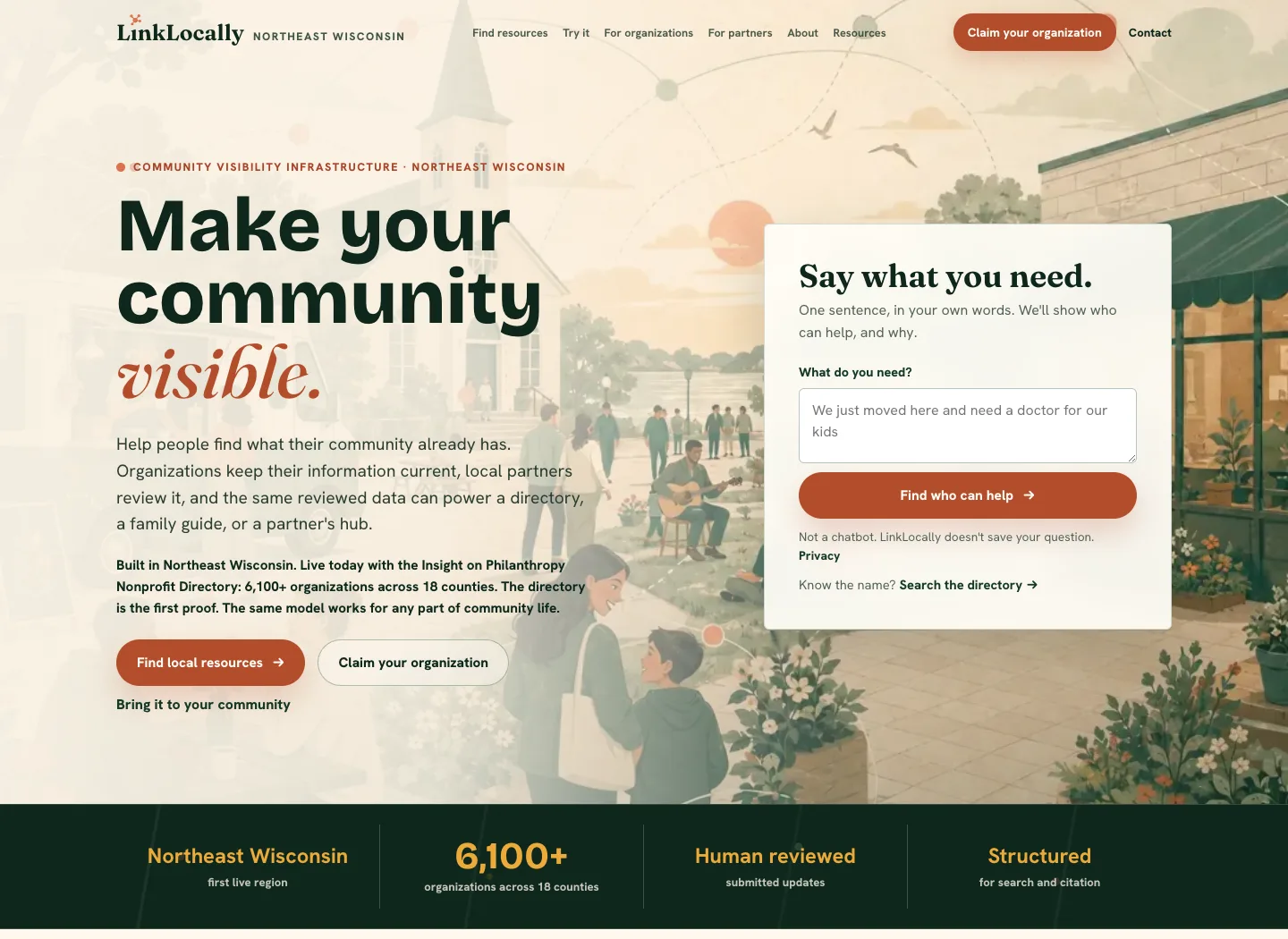
LinkLocally started with a simple problem. Useful community information already existed. People just couldn’t find it, because it was scattered across websites, PDFs, public records, and different organizations.
That same thinking is behind Build With You AI. Start with the problem. Understand the work. Build only what helps.
The nonprofit directory is published in partnership with Insight on Philanthropy.
LinkLocally is my own product, not a client result.
Insights
Scope, tools, and how we work together.
Anyone who keeps doing one thing they wish were easier. A nonprofit director rebuilding the same board report every month. A small business owner answering the same customer questions by hand. It all works remotely and asynchronously, so where you are doesn’t matter.
The report you keep creating. The research you keep doing. The inquiry you keep answering. The posts you keep trying to write. The follow-up you keep remembering. The information you keep searching for. The thing that makes you think, “There has to be a better way to do this.”
No. Show me the work first. We’ll figure out afterward whether ChatGPT, Claude, Copilot, an automation, software you already have, or something else makes sense.
Yes. Sometimes showing you how is enough. Sometimes we build it together. Sometimes you’d rather I build it for you. We’ll know more once we see the work.
No. It works asynchronously: you send recordings, I send back what I found and things to try, and we go back and forth on your schedule. You’re paying for the outcome, not a block of time. Plan on about two weeks from the day we start.
Not necessarily. If we can solve the problem inside the Better Way work, great. If it needs custom development, integrations, or a larger build, I’ll scope that separately, and you decide before anything else happens.
After I read your message and we agree it’s a fit, I send a secure payment link. Nothing is charged when you send the form.
Before you share anything that isn’t public, we agree what can be shared, which tools we use, and who sees it. In a screen recording, skip or blur anything confidential. Please leave confidential information out of your first message.
Tell me about it. It doesn’t need to sound impressive, and it doesn’t need to be an “AI use case.” Just tell me what you’re doing today and what you wish were easier. We’ll start there.
I read every one myself and reply within two business days.